

NPS Launches New Master’s in Artificial Intelligence Focused on Warfighter Needs
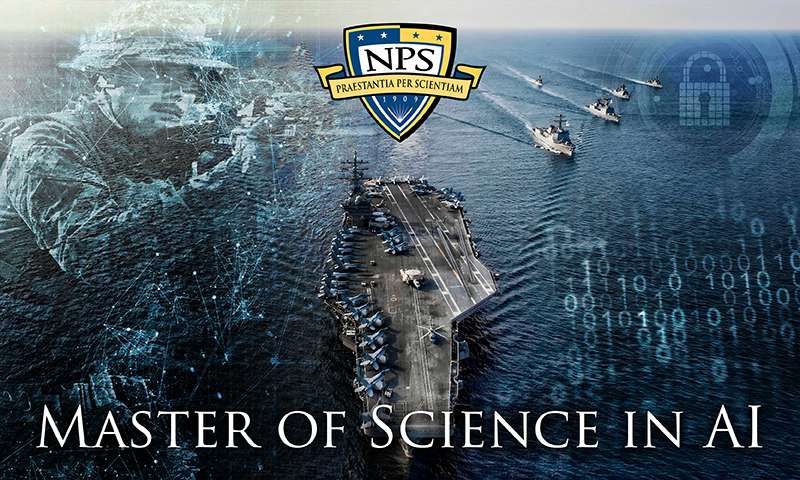
With the inaugural cohort beginning in July 2026, Naval Postgraduate School’s brand new, one year Master of Science in AI degree will deliver the advanced knowledge, skills, and practices necessary to rapidly develop military leaders with AI expertise.

U.S. Sailors stand watch in the combat information center aboard ship. AI will enable human-machine teams to cycle through information quicker to gain decision advantage.
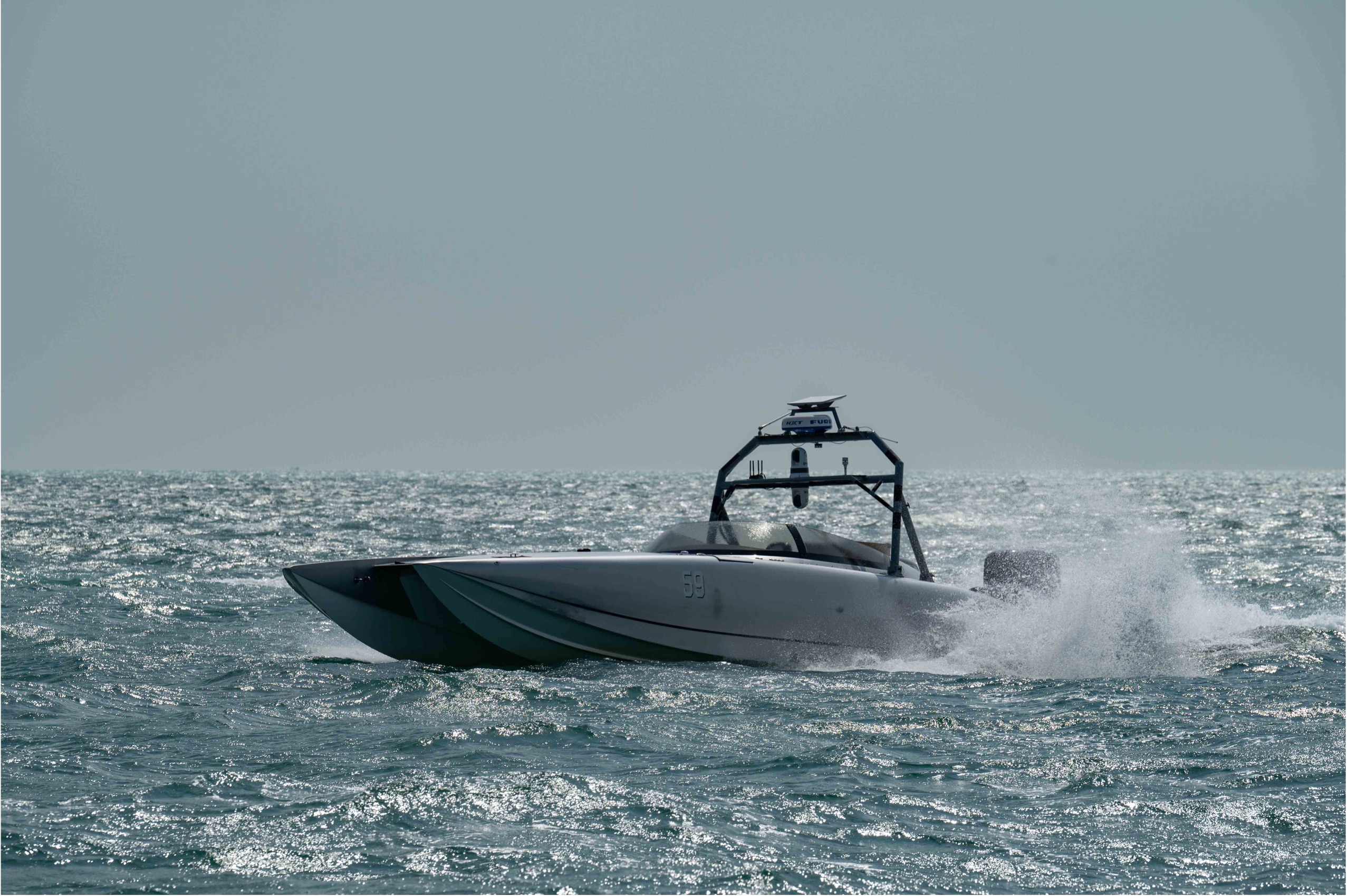
Task Force 59 integrates unmanned systems and artificial intelligence with maritime operations in the U.S. 5th Fleet area of operations to help ensure maritime security and stability in the Middle East region.
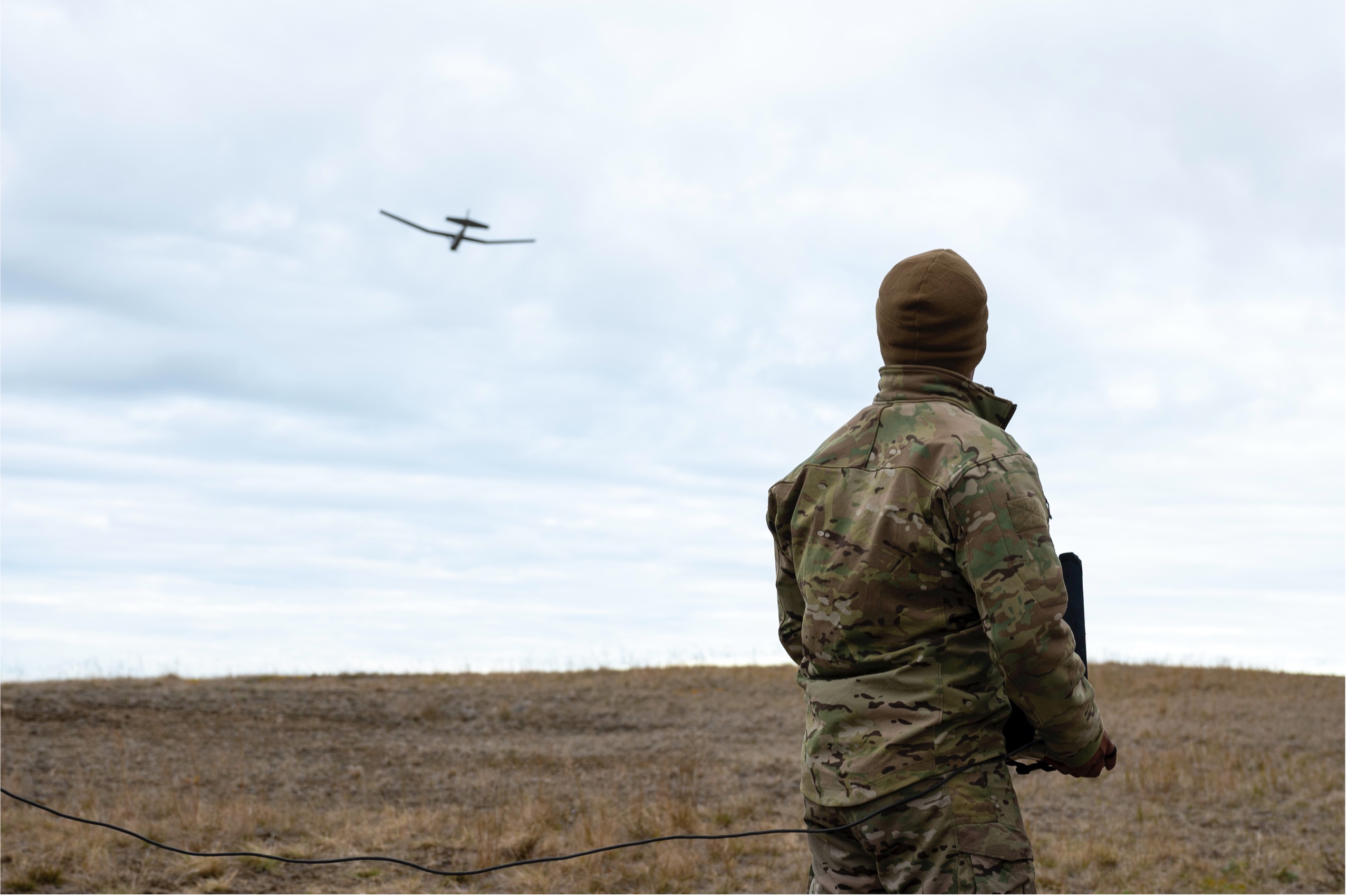
Sensors, autonomy, AI, and machine learning software capabilities coupled with the development of layered denial, deterrence, and defeat mechanisms capable of addressing current and emerging threats are fundamental to national defense.
Graduates of Naval Postgraduate School's new Master of Science in AI will gain the knowledge to lead AI integration within their warfare communities.
MONTEREY, CA, UNITED STATES, December 16, 2025 /EINPresswire.com/ -- The Naval Postgraduate School (NPS) has launched a brand new Master of Science in Artificial Intelligence (MSAI) degree that will confer the advanced knowledge, skills, and practices necessary to develop, assess, and deploy AI for the U.S. Navy, joint forces and allied militaries. Graduates through the new program will be prepared to lead AI integration within their communities and across the U.S. Department of War (DOW).
The one-year MSAI residential program is designed to rapidly develop military leaders with advanced expertise in one of the most strategically vital technologies of the 21st century. The U.S. Secretary of War’s recent announcement of the GenAI.mil initiative directed that, “AI should be in your battle rhythm every single day.” The first cohort of NPS students will start the new MSAI degree program in July 2026, with an initial emphasis on operationalizing AI.
Through a combination of lectures, laboratory assignments, hands-on research projects, and team hackathons, NPS students will gain a deep understanding of AI and its warfighting applications in Command, Control, Communication, Computers, Cyber, Intelligence, Surveillance, Reconnaissance and Space (C5ISR&S).
“This program is going to be quite intense, but advantageous, and will instill in our students knowledge of advanced AI techniques and skills that are needed to solve some of the most complex problems that our military faces,” noted Dr. Gurminder Singh, chair of the NPS Department of Computer Science.
The NPS curriculum comes at a time when AI has become central to global security competition and is transforming all aspects of modern society and military operations. According to Singh, the program serves both the U.S. Navy’s urgent operational needs while capitalizing on the school’s unique ability to deliver cutting-edge relevant education tied directly to military problem-solving.
“We are in the age of AI. Its impact on maritime operations, from seabed to space, and across the seven joint warfighting functions, is and will be profound,” said U.S. Navy Vice Adm. Michael Vernazza, Commander, Naval Information Forces. “We must act with urgency to integrate this transformational technology and educate leaders who can employ it decisively and at scale across the fleet. The Naval Postgraduate School has been a cornerstone of our efforts to empower and operationalize AI, and this new AI master’s degree underscores that commitment.”
“We are in a race,” added Singh. “And China is giving us tough competition in the use and development of AI. Our military needs to prepare quickly to deal with that challenge. This AI master’s degree is designed to produce relevant expertise for applied AI in just one year.”
The new MSAI program at NPS aligns with the six Critical Technology Areas recently announced by Dr. Emil Michael, Under Secretary of War for Research and Engineering (OUSW(R&E)), as essential to address the United States’ most pressing national security challenges. In an official video posted on OUSW(R&E)’s LinkedIn, Michael stated that applied AI will transform the Department of War (DoW) into an “AI-First” organization, revolutionizing decision-making and operational efficiency. The effort is in response to direction from the White House.
“[Applied AI] has the potential to reshape the global balance of power, spark entirely new industries, and revolutionize the way we live and work,” states the July 2025 White House AI Action Plan. “As our global competitors race to exploit these technologies, it is a national security imperative for the United States to achieve and maintain unquestioned and unchallenged global technological dominance.”
Many say the AI-enabled battlespace is now upon us, with the future of warfighting advantage AI-driven. Human-machine teaming must continuously shrink the Orient-Observe-Decide-Act (OODA) cycle to gain and maintain decision advantage. AI is critical to technologies like intelligent autonomous systems, combat systems, and cybersecurity, but also to the business of leading and managing national defense for increasing efficiency and effectiveness.
The MSAI program at NPS will look deeply into core AI technologies that are transforming every aspect of warfare and operations. It emphasizes practical application through projects with realistic military scenarios and the timely acquisition of AI systems while being rooted in responsible AI principles. The program is designed for U.S. active-duty military and qualified international officers sponsored by allied and partner nations, and DOW civilian employees who already have a firm grasp of computer science principles and possess strong analytical and problem-solving skills.
In addition to equipping graduates with deep technological understanding of AI to include coding, modeling, experimentation and ethical governance, the new master’s degree will prepare military leaders to embed AI into new tactical and strategic concepts of all-domain warfighting.
Unlike NPS’ existing two-year master’s in computer science, which provides a specialization track in AI, the new degree is accelerated, focused on AI fundamentals and an emphasis on introducing students to advanced AI topics. Students will be required to complete either a research thesis, capstone project, or specialized electives, depending on the needs of their sponsoring commands. For students who have a strong background in computer science but lack an introduction to AI, there will be a refresher quarter to build that foundation.
The curriculum spans multiple dimensions of AI, including deep learning, trustworthy and responsible AI, adversarial and secure machine learning, computer vision, and applications in robotics and decision support. The program will go beyond algorithms, embedding AI education in the context of real-world military applications.
“NPS’ depth of expertise in technology and the military context makes it uniquely suited to deliver a highly relevant and effective AI master’s degree for the U.S. Department of War,” said Dr. Mathias Kolsch, associate professor in computer science and NPS lead on the “Leading Data and AI-enabled Organizations” short course for defense leaders developed in 2022 in partnership with the DOW Chief Digital and AI Office (CDAO).
Kolsch said that while many NPS computer science faculty specialize in machine learning, teaching and learning for the MSAI program will go beyond the technology at the heart of generative AI and delve into applied perspectives, best practices such as DevSecOps, and experimentation with emerging tools in collaborative team efforts, including hackathons.
“AI's true value comes from connecting the technology to an application domain,” said Kolsch. “This is hard in general and usually out of scope for a graduate program, but the naval officers and other NPS students bring a ton of domain experience, laser-sharp focus, and deep-rooted motivation to their graduate program so that we will be able to create this connection in the course of just one year. Our graduates will be able to truly connect the dots and leave NPS with the tried-and-true ability to accelerate and to lead AI innovation.”
Kolsch wants NPS students to understand AI and its challenges, from the risk of trusting its output to the cost of implementing a new solution.
“Our current and future leaders must understand the potential and limitations of this increasingly powerful technology,” he said. “They must anticipate and mitigate risk inherent to AI such that the AI-involved systems as a whole are reliable and trusted, which can only come from thorough technological knowledge as well as a good grasp of the application context.”
The concentration of talent and technology partners at NPS enhance the learning, and when combined with NPS’ focus on applied military problem sets, enables the school to deliver what Singh says will be one of the strongest AI graduate programs in the nation. “NPS is empowering its military graduates with the necessary AI understanding and skills to lead more effectively with this rapidly developing technology,” he said.
While NPS has been involved with AI for decades, the MSAI program was accelerated as a strategic initiative by the NPS AI Task Force and the school’s academic council. The NPS AI Task Force, led by vice provost of warfare studies retired U.S. Marine Corps Col. Randy Pugh, launched in early 2025 focused on three lines of effort: AI education, problem-solving, and technology infrastructure.
“We have the AI expertise on board already. We understand our students, we understand the type of problems that the Navy and military faces, and we have industry partners like NVIDIA who help ensure the NPS education and applied research is cutting edge,” said Pugh. “It’s always a team effort, and the collaborations led by Dr. Bret Michael, vice provost of academic affairs, and U.S. Navy Capt. Mike Owen, our information warfare chair, exemplify the academic-military synergy that underpins all that we do here at NPS.”
Michael added, “The fact that we were able to put this AI master’s degree together so quickly reflects NPS’ ability to respond directly to the unique, emerging needs of the Navy and Department of War. I am very proud of the team who did the heavy lifting, and we all are looking forward to the start of the first cohort!”
The urgency from commanders across the fleet to operationalize AI is clear, stressed Owen. “NPS stepped up to deliver the MSAI program and Commander, Naval Information Forces has matched pace providing the initial sponsorship for the pilot cohort. We will build on this success, expand access to the MSAI opportunity, and work to keep the program highly-applied and cutting-edge with our fleet and NPS industry partners.”
--------------
Naval Postgraduate School (NPS), located in Monterey, California, provides defense-focused graduate education, including classified studies and interdisciplinary research, to advance the operational effectiveness, technological leadership, and warfighting advantage of the naval service. Established in 1909, NPS offers master’s and doctorate programs to Department of War military and civilians, along with international partners, to deliver transformative solutions and innovative leaders through advanced education and research.
LCDR Kristina Wiedemann, USN
Naval Postgraduate School, Public Affairs
831-656-3567
email us here
Visit us on social media:
LinkedIn
Instagram
Facebook
YouTube
X
Legal Disclaimer:
EIN Presswire provides this news content "as is" without warranty of any kind. We do not accept any responsibility or liability for the accuracy, content, images, videos, licenses, completeness, legality, or reliability of the information contained in this article. If you have any complaints or copyright issues related to this article, kindly contact the author above.
